The Berkshire Bach Society
 Search GO

The Berkshire Bach Society

Baroque music in the Berkshires

"...a gloriously colorful palette ..."
review of Oct 11 concert by J. P. Keeler
$10,000 Matching Fund Grant!
Please Read     Donate Online
X
From the Music Director, Kenneth Cooper, and a word from the Master

The Berkshire Bach Society takes enormous pleasure in welcoming you to Bach at New Year's 2009-2010. This year we will return to our tradition and present all six of Bach's magnificent Brandenburg Concerti. We will perform in three beautiful venues:

  1. Mahaiwe Performing Arts Center in Great Barrington, MA on New Year's Eve, Thursday, December 31 at 6 PM
  2. Colonial Theatre in Pittsfield, MA on New Year's Day, Friday, January 1 at 3 PM
  3. Troy Savings Bank Music Hall in Troy, NY on Saturday, January 2 at 4 PM

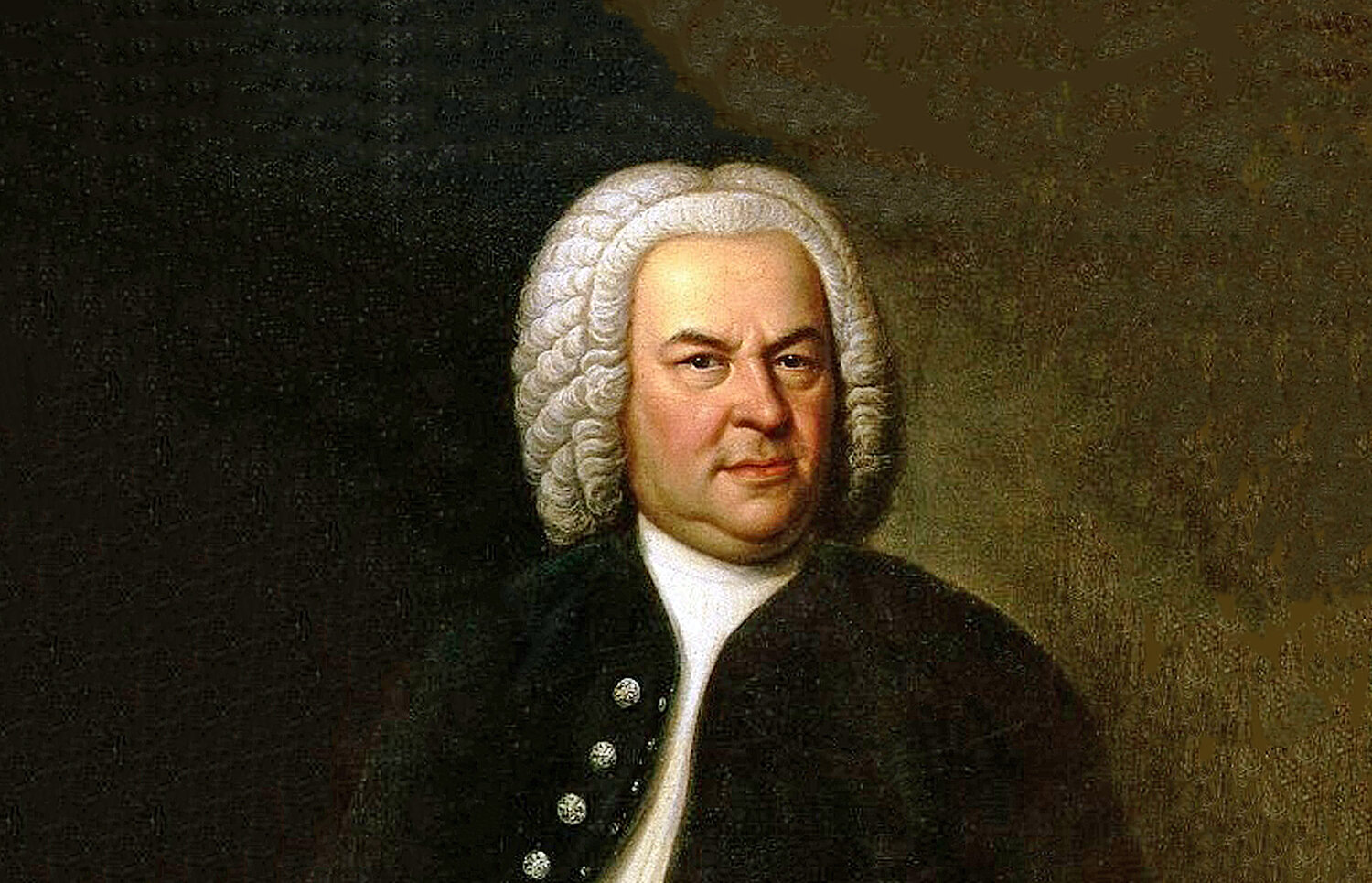
We are grateful to you for your generous support and grateful for the support contributed by the composer himself, who communicated his enthusiasm for Berkshire Bach just last week in an extraordinary email. After gracious greetings and congratulations, JS Bach writes:

My six Concerti for various instruments which were played with so much success at the Cöthen court and totally ignored by the ignorant - or stingy - Margrave of Brandenburg, have always been works I have been especially proud of. It is to the great Vivaldi that I owe the inspiration for these pieces - he paved the way with his astonishingly vital, passionate and sometimes mischievous concerti he wrote for that remarkable institution of charity, the Pietà, where he had to deal with a roomful of rowdy Italian teenage girls by providing them with material stimulating enough to keep them out of trouble. (My cantatas later served the same purpose for the boys at the Thomasschule.)

The ensemble at Cöthen played my pieces pretty well, except for my rather stubborn prince, whose gamba-playing was listenable only if he stayed within a three-note range. Once again, my distinguished colleague Dr Leibniz tried to convince me that this was the best of all possible ensembles, but he eventually was made to understand my desire for greater and greater perfection.

It has been a rewarding experience in past years for me to hear the superb Berkshire Bach Ensemble play the six so-called Brandenburg Concerti in the order I wrote them down, something I never had the opportunity to do. It now seems totally right to me to play all the bigger ones first, then gradually focus on the quieter, more internal elements. The first concerto, a hunting scene, features the winds (oboes, bassoon and horns). The lyrical Adagio could suggest the country-folk taking their much needed rest, an effect the great Vivaldi stole from me when he wrote one of his later works, The Seasons, I believe it was. I most enjoyed your use of the timpani, which I didn't include in the score as those guys always knew how to improvise their parts. Your plan for the final Menuet, building up each recurrence with a different scoring, is ingenious and just what I had in mind. After all, just because I scored the piece for strings, oboes and horns didn't necessarily mean they had to play together all the time. The ländler-like violin solo is a delicious ornament and reminded me of my youthful dancing days, when I met my first wife Maria Barbara.

Concerto 2 is my contribution to what, in Baroque Germany, we used to call "Dixieländler", a zesty competition among superlative musicians, each getting a hot riff to play. I couldn't help indulging my friends and family with an "in-joke" in this one. In the bass towards the end of the first Allegro, you will hear - if you listen very carefully - four long notes among all the short ones: Bb - A - C - B (which in German would be B - A - C - H). Actually this rare configuration occurs once in each concerto, but trying to find it might be more work than it is worth.

Concerto 3 is particularly welcome in your expanded version, which I remember making for one of my cantatas - someone much later called it Cantata No. 174, not realizing that not only is the numbering wrong, but that I never used the word "cantata" to describe a sacred choral work. While my score supplied only the string parts, I sent the bassoon, oboe and very difficult horn parts along separately, as they could be added ad libitum. But the piece turns out splendidly when all the parts are put together and still makes quite a racket, doesn't it? Thank you, too, for supplying such a gorgeous slow movement - I never could decide which one to use. But an Adagio wasn't included in the score because I didn't have quite enough paper that day.

Concerto 4 uses the flutes as echoes. In the first movement the echoes are imitative; in the second they echo the strings, sometimes presumptuously making the strings echo them, and in the third movement the flutes are in canon, a very organized imitative pattern. There was no way to know whether the Margrave had the newly improved transverse flutes or the older-style recorders, so to take no chances, I called them fiauti d'eco (echo-flutes), not perhaps the most helpful term. This concerto features a big solo for my concertmaster - myself on good days.

Concerto 5 was a long shot - I decided to use the keyboard as a solo instrument (not just a continuo) along with flute and violin for the solo group, something never done before. Little did I know then that I was "inventing" the piano concerto. I was still pleased with my work even after hearing what wonders Mozart, Beethoven, Brahms and even Tchaikovsky accomplished with this genre. Needless to say, I got carried away. Many harpsichordists - and even pianists - have written to me over the years, especially after the concerti became popular in the 1950's, thanking me for that extravagant cadenza.

For the final concerto, I thought it desirable to send home the extroverts and pare down the ensemble to the mellower folks who stay to play "real" music when the party is over. I know they are hanging around to sample the really expensive wine, but they usually deserve it. The sixth concerto is, I think, the most intimate and most subtle instrumental work I ever wrote. In it, I tried to separate melody and texture into distinguishable elements. In the first movement there is texture only, the inter-weaving of the two upper viola parts; the Adagio is a purely melodic dialogue in an Italian vocal style that I hear my colleague Handel was especially good at; and the last movement, to end the evening, is a rousing gigue in which melody and texture compete, giving all the strings a run for their money. (Sorry, no Bach can resist a pun.)

As I emphasized in my email a year ago, I know that the Berkshire Bach Ensemble will give its usual spectacular performance, and have no fear, I will be there - in spirit.

Yours truly,

jsbach@elysianfields.com

X

Saturday, Nov 28, 2009

Handel: Messiah Sing-In

program

conductors: Jack Brown, Christine Gevert, Ben Harms
click for bios
BBS Instrumental Players

7:30 p.m. at the First Congregational Church
Great Barrington, MA
FREE

X
Brass & Organ: A Valentine Bouquet

a program of music by
JS Bach, JC Bach, Brahms, Mendelssohn, Reiche, Clarke

St. Stephen's Episcopal Church, 67 East St, Pittsfield, MA

Sunday, February 14, 2010, 4 p.m.

Peter Sykes, organ
Allan Dean & Neil Mueller, trumpet
Laura Klock, french horn
Tom Hutchinson, trombone
Morris Kainuma, tuba

Concert Program       Press Release       Color Flyer

Cosponsored by the Berkshire Chapter of the American Guild of Organists

Our Next Concert:     Sunday, Feb 14

Brass & Organ: A Valentine Bouquet  Details